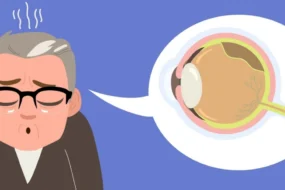
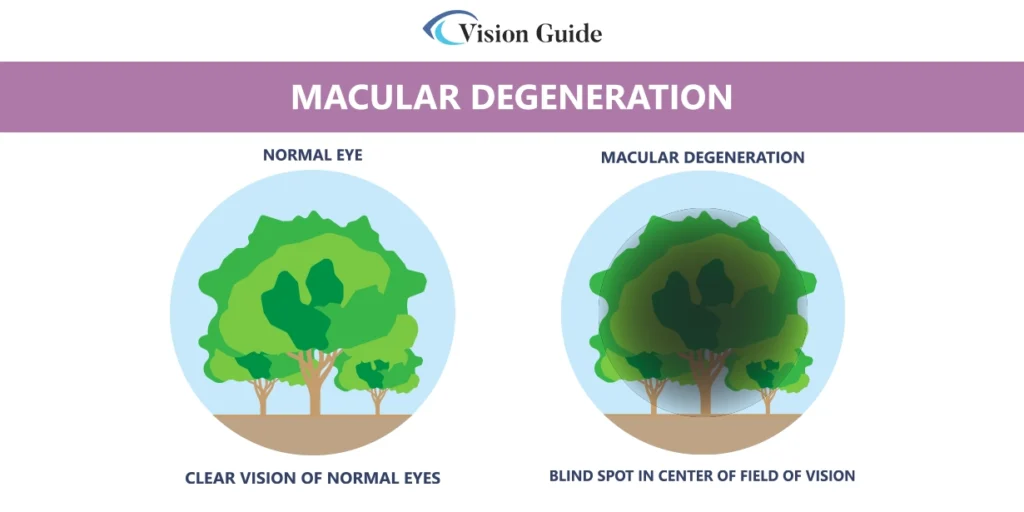
Losing vision at any age and to any extent could be challenging. It might start with sudden blurred vision or gradual loss of peripheral vision but could lead to complete and irreversible vision loss if corrective measures are not taken in time. One such common eye disease is macular degeneration, an eye condition that occurs when the cells found in the macula (central part of the retina) are damaged, resulting in distorted vision and progressive loss of central vision.
The most common form of macular degeneration is age-related macular degeneration or AMD. It usually affects people over 50 years of age. Age-related macular degeneration hampers one’s ability to see things right in front of them. It does not make the patient lose all vision as their peripheral vision stays intact. Read on to learn more about this eye disease, its risk factors, different types, symptoms and the available treatment options.
Who is at Risk?
As the name suggests, age-related macular degeneration is primarily linked with age. As we get older, the body’s ability to repair and regenerate cells declines and the macula becomes prone to damage. However, in rare cases it can occur in younger adults, which is known as juvenile macular degeneration. There is no exact known cause of age-related macular degeneration other than the natural ageing process but here are some associated risk factors to be considerate of:
- Obesity
- Having diabetes, hypertension or high blood pressure
- Regular smoking or long-term exposure to smoke
- Family history of AMD
- Imbalanced diet or a diet high in saturated fats
Types of Age-related Macular Degeneration
There are two types of AMD:
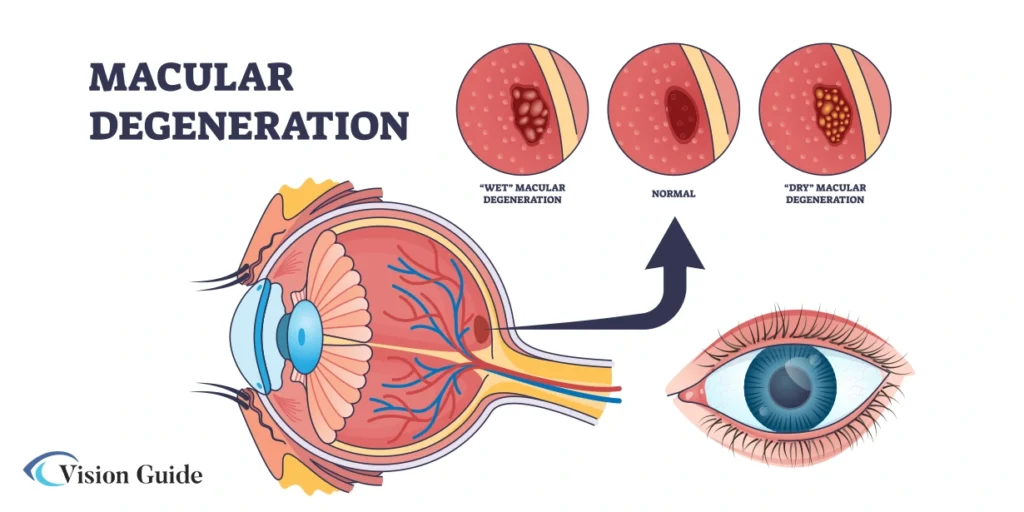
1. Dry Macular Degeneration
Dry macular degeneration occurs when the deterioration of retinal cells form yellow protein deposits know as drusen, making the macula thin and dry. Most people with macular degeneration have dry AMD that progresses slowly, with blurry vision in one eye, leading to total central vision failure. In some cases, it develops into the wet form.
2. Wet Macular Degeneration
Wet macular degeneration occurs when abnormal blood vessels form in the eye and secrete fluid and blood under the macula. As a result, swelling develops in the macula, blocking your central vision. Wet AMD is less common but more severe, as it causes rapid central vision loss.
Symptoms of Age-Related Macular Degeneration
As age-related macular degeneration damages the macula, it also hampers its function of transferring images from the optic nerve to the brain. This restricts the brain’s ability to decipher the images your eyes see, leading to symptoms such as:
- Blurry vision in one eye or both
- Not being able to see clearly in low light
- Seeing colours differently
- Straight lines appearing wavy
- Dark or blank spots in the central field of vision
Amsler grids are used to monitor any changes or detect early signs of AMD. The aim is to check for any wavy, distorted, blurry or missing lines on the grid. If any are present, then it is advised to seek clinical assessment by your local optometrist.
Treatment of Macular Degeneration
Unfortunately, age-related macular degeneration has no cure to reverse any loss of vision to this day. There is currently no treatment for dry AMD but low vision aids such as magnifiers and the use of bright lighting can support those with AMD.
However, with wet AMD, early diagnosis and treatment can slow down its progression and reduce the severity of symptoms. Injections known as Anti-VEGF are given directly in the eye to slow down the growth of abnormal blood vessels and stop the formation of new blood vessels that are causing leakage. Light therapy such as PDT (photodynamic therapy) can also be used to treat wet AMD. Changes in diet and lifestyle can also help reduce the risk of developing dry AMD.

Living with Age-Related Macular Degeneration
Age-related macular degeneration does not necessarily cause significant vision loss in early stages, especially if it affects just one eye as the other eye often compensates for this. Plus, the vision loss usually happens over a long time. To manage daily life activities with AMD, you can discuss some options with your optician, such as using a magnifying device for reading and using brighter lighting in everyday settings. Smart screen software technology can be used to make reading more comfortable. There are also low vision support groups available that can train an AMD patient on eccentric viewing technique – using their peripheral vision to read to compensate for the loss of central vision.
Although macular degeneration is only responsible for central vision loss, it can still make activities of daily living (such as reading, driving, cooking and recognising faces) exceedingly difficult. Regular consumption of nutritional supplements may help slow down this eye disease in most cases, but in severe cases, loss of central vision can be sudden. An AMD patient can officially be registered under the Sight Impaired (SI) or Severely Sight Impaired (SSI) categories in the UK to certify their vision loss. To help preserve your vision, it is important to take regular guidance from your eye health provider.
FAQs
How serious is age-related macular degeneration?
Age-related Macular degeneration is a leading cause of vision loss worldwide, particularly among older adults. As per certain predictions, more than 288 million people will suffer from this eye disease by the year 2040.
How is age-related macular degeneration diagnosed?
Most people do not get any noticeable symptoms until macular degeneration progresses to its advanced stage. So, regular eye tests are key to detect this eye condition in its earlier stages and start the treatment right away to minimise the damage and vision loss.
Does age-related macular degeneration affect both eyes?
Macular degeneration can affect one or both eyes at once. However, the levels of severity may differ.
Does treatment of age-related macular degeneration cause any side effects?
It is noteworthy that treatment of wet macular degeneration may cause some rare complications, such as:
– Retinal detachment
– Eye infections
– Structural eye damage
– Cataracts
– Severe vision loss
When should I seek medical assistance?
Those who have macular degeneration should seek medical assistance immediately if these signs appear:
– Sensitivity to light
– Painful eye inflammation
– Feeling pressure from behind your eye
– Eye floaters or flashes
Disclaimer: The advice in this article is for informational purposes only and does not replace medical care or an in-person check-up. Please check with an eye care professional before purchasing any products or remedies. For information on our article review process, please refer to our Editorial Policy.


Having graduated from City and Islington College in 2016, Krina Halai is a certified Dispensing Optician working with Feel Good Contacts. With 13 years of experience in the optical field, she has worked in multiple practices, including Boots and Specsavers, performed paediatric dispensing, supervised and trained future optical professionals and triaged patients for numerous spectacle fittings, repairs and adjustments. She has also taken an online course on myopia control and helped many children prevent their myopia from progressing.