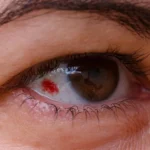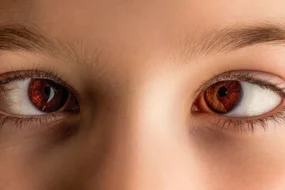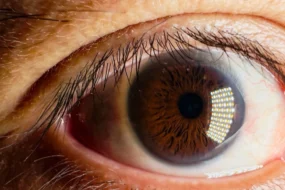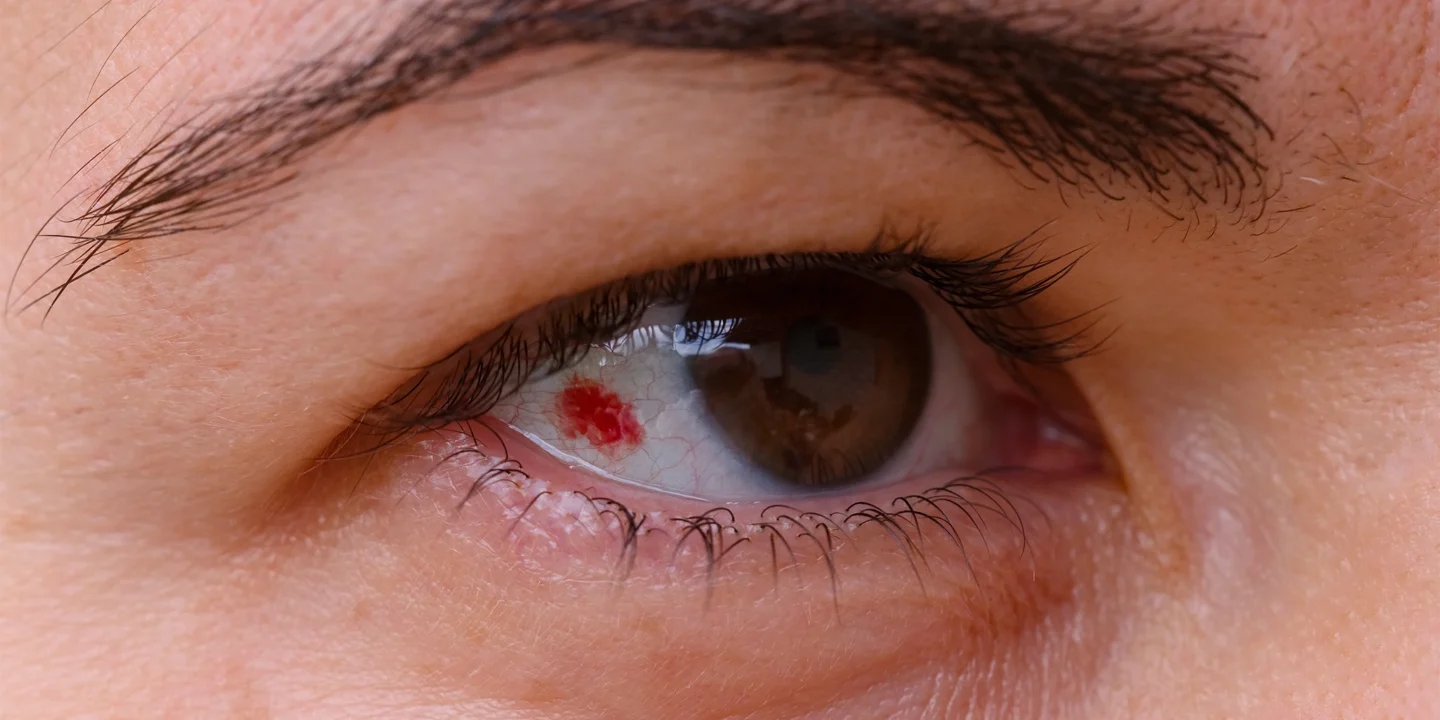
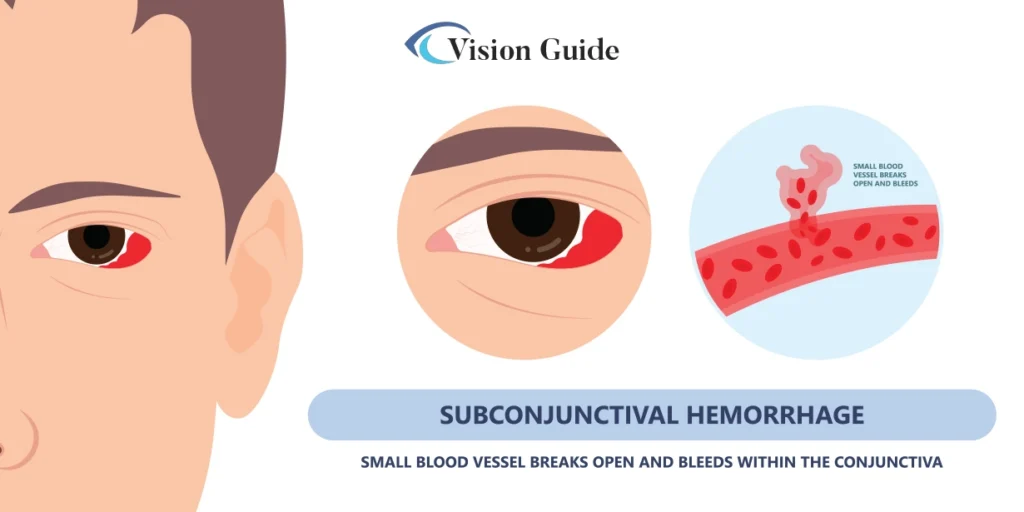
Subconjunctival haemorrhage refers to the bursting of one of the blood vessels under the clear, thin protective tissue (conjunctiva) that lines the eyelids and covers the white of the eye (sclera). When this happens, the blood is not absorbed immediately; instead, it leaks and collects between the sclera and conjunctiva.
Even though subconjunctival haemorrhage looks alarming, it’s a common and harmless eye condition that doesn’t hurt and doesn’t need treatment. It often goes away on its own within a few days to a few weeks.
Subconjunctival haemorrhage: Signs and symptoms
Most individuals do not even notice a burst blood vessel in the eye until someone points it out or they see it in the mirror. The main sign of a blood vessel popping in the eye is that it appears as a small, but noticeable red patch on the eyeball’s white portion, which makes it look a lot worse than it actually is. There might also be some rare symptoms, like mild irritation or itching in the eye. Some people might also feel a gritty sensation in the eye, but there’s usually no pain, discharge, swelling.
Subconjunctival haemorrhage does not affect the eye’s centre part, which means it does not affect the vision. Generally, it occurs only once in one eye. However, some health conditions might cause it again in the future.
Subconjunctival Haemorrhage Causes
A burst blood vessel in the eye happens suddenly. Even though its exact cause is difficult to determine, older people and people taking anticoagulants or aspirin are more prone to it. Some of its common causes include:
- Straining while vomiting, sneezing, coughing, nose blowing or using the toilet
- Heavy lifting
- Injury to the eye or head
- Rubbing the eye too hard
- Poking or bumping the eye
- Irritation from wearing contact lenses
- Eye surgery
Some risk factors include:
- Some blood-thinning medicines
- High blood pressure
- Blood clotting disorders
- Diabetes
Treatment for a Broken Blood Vessel in the Eye
As already mentioned, a broken blood vessel in the eye doesn’t usually need any treatment. The body reabsorbs the blood and this condition usually resolves within two weeks. You can work normally while it’s healing and you may notice the bright red spot in the eye fading to brown or yellow before completely disappearing. However, you can consider the following tips:
- If you feel any irritation or grittiness, you can ask your eye specialist to recommend you moisturising eye drops. If you popped an eye blood vessel due to an eye injury, then you should consult an optometrist to ensure your eye isn’t damaged in any way.
- If you get subconjunctival haemorrhage frequently, you should get your blood pressure checked by your GP. They may conduct some tests to identify potential underlying causes, such as poor blood clotting or high blood pressure.
Prevention
Since a burst blood vessel in the eye can occur spontaneously, it’s highly unlikely to prevent it. However, following eye care tips may help reduce your overall risk.
Wut Win, an in-house optician at Feel Good Contacts, suggests the following ways:
- Try to avoid rubbing your eyes.
- Use lubricating eye drops, like artificial tears, to keep your eyes moisturised, especially if you have irritated or dry eyes.
- Have your contact lenses check-up done regularly to ensure a good fit and avoid irritation.
- To protect your eyes, wear protective eyewear when playing sports or doing yard work. Also, wear sunglasses with 100% UV protection during outdoor activities or in strong winds.
- Have your eye tested regularly.
If your subconjunctival haemorrhage is due to a blood-thinning medicine or a medical condition, consult your general practitioner (GP), who can suggest ways to reduce its recurrence.
Frequently Asked Questions
1. How serious is a burst blood vessel in the eye?
Popping an eye blood vessel is usually not serious or dangerous, as it heals naturally without any treatment. However, in rare cases, it can signify an underlying health issue like trauma, blood disorders, or high blood pressure. If you’re experiencing other symptoms with this eye condition, like swelling, blurry vision or pain, you should consult an optometrist at the earliest.
2. What is the fastest way to heal a broken blood vessel in the eye?
No natural or medical treatment can immediately clear the red patch on the eyeball. The body takes time to absorb the blood. However, you can minimise discomfort and support the healing process by following optician-recommended methods, such as using eye drops.
3. Can stress cause a blood vessel to burst in your eye?
Psychological or emotional stress doesn’t generally cause a blood vessel in the eye to break. It usually happens due to physical strain from coughing, sneezing, vomiting or heavy lifting.
4. What do I do if a blood vein pops in my eye?
Popping an eye blood vessel is harmless and usually goes away on its own. You could use eye drops and avoid rubbing your eyes. However, if you experience other symptoms with this eye condition like swelling, blurry vision or pain, you should consult an optometrist at the earliest.
Disclaimer: The advice in this article is for informational purposes only and does not replace medical care or an in-person check-up. Please check with an eye care professional before purchasing any products or remedies. For information on our article review process, please refer to our Editorial Policy.


Wut Win is a qualified Dispensing Optician at Feel Good Contacts and a member of the Association of British Dispensing Opticians (ABDO). She is registered with the General Optical Council (GOC) and adheres to its professional guidelines. Wut graduated from City & Islington College with a Diploma in Ophthalmic Dispensing in 2006 and has over 17 years of experience. She has worked with several leading high street opticians, dispensing eyewear, including prescription glasses and sunglasses. Wut has also assisted children with autism and special needs through the Special School Eyecare Service.