Iridology is considered an alternative medical technique founded on the belief that the iris (the coloured part of the eye around the pupil) reveals information about the body’s internal condition, providing insight into a patient’s overall health. Commonly associated with the holistic approach, it has gained popularity in many parts of the world for its distinctive approach to health assessment. However, its credibility remains contested within the medical and scientific communities. This article presents an overview of iridology, addressing its origin, common notions, the function of the iridology chart, claimed benefits, scientific support and safety concerns.
What is iridology?
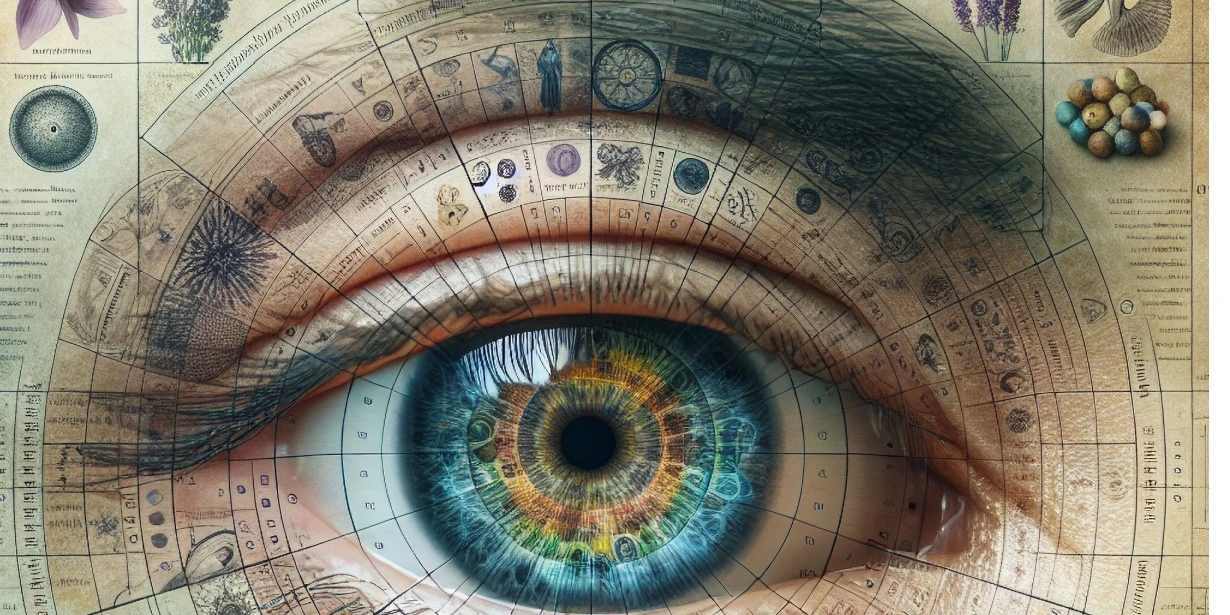
Iridology is the study of the iris to assess an individual’s overall health. Practitioners claim that specific parts of the iris are related to particular organs and bodily systems. By analysing patterns, colours and markings on the iris, they seek to identify potential organ weaknesses or imbalances in the structures of the body. Iridology is generally considered a complementary or alternative health practice, not a recognised diagnostic tool in conventional medicine.
How did iridology come into existence?
The concept of associating eyes with overall health has existed for centuries, but modern iridology developed in the late 19th century. It is commonly attributed to Ignaz von Peczely, a Hungarian physician who is known to have observed changes in the iris following an injury to an owl.
These observations prompted further investigation into the possibility that the iris reflects bodily changes. Over time, this theory evolved into a structured system of mapping zones of the iris. By the early twentieth century, iridology had gained recognition within alternative medicine and continues to be practised.
How does iridology work?
The practice of iridology is based on the theory that the iris is linked to the body via the nervous system. Supporters of this practice believe that changes in health show visible signs in the iris, including spots, lines or colour variations.
During an iridology session, the practitioner examines the iris using magnifying tools or digital imaging. These observations are then compared with an iridology chart to interpret what different markings may indicate about the body. Apparently, iridologists do not diagnose specific diseases but instead use their findings to highlight potential imbalances or areas of health that require attention.
What is an iridology chart?
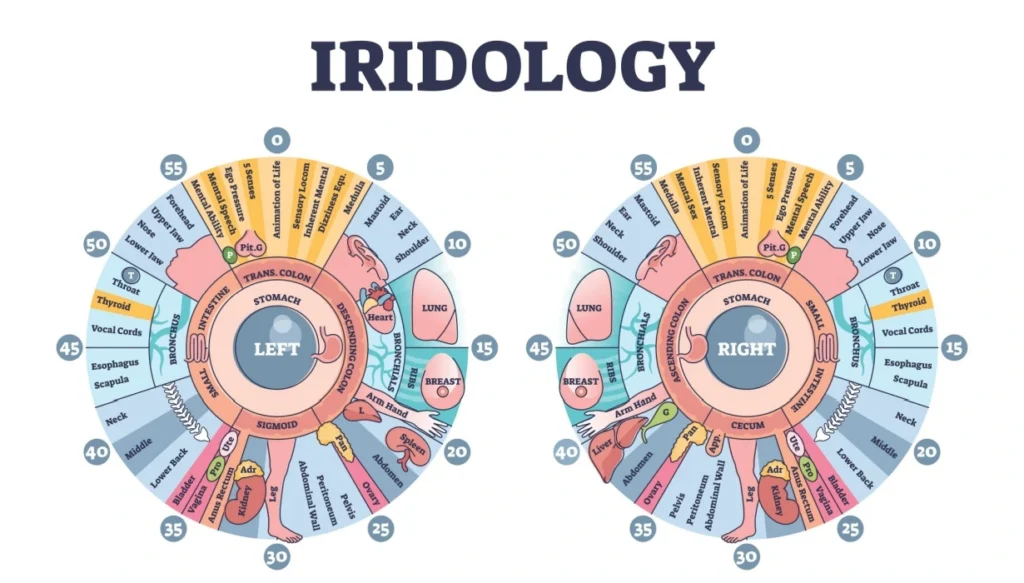
An iridology chart visually divides the iris into multiple sections, each of which is claimed to be connected to a specific organ or bodily system. The chart is typically arranged in a clock-face pattern, mapping organs such as the liver, heart, kidneys and digestive system to designated zones of the iris. There is no universally accepted iridology chart. Different practitioners may use different charts, leading to notable differences in how the iris markings are interpreted and which organs or systems correspond to which specific zones that are mapped.
Claimed benefits of iridology
Advocates of iridology claim that it offers several benefits, particularly in preventive and holistic health approaches, such as:
- Giving insight into general health and well-being
- Identifying potential areas of stress or imbalance in the body
- Supporting early awareness of potential health concerns
- Serving as a non-invasive method of health assessment
- Guiding lifestyle and nutritional modifications
Is iridology scientifically supported?
The alleged benefits of iridology primarily focus on health awareness and prevention rather than diagnosis. However, these claims lack robust scientific support, making it known as pseudoscience. The most significant concern is that the iris does not undergo substantial changes in response to most health conditions. This challenges the very foundational premise that the iris reflects the state of internal organs.
Additionally, research and clinical evaluations consistently indicate that iridology cannot accurately diagnose or detect diseases. Controlled studies have also shown that iridologists do not demonstrate reliable accuracy in identifying medical conditions through iris examination. In many instances, their assessments are arbitrary and uncertain.
Safety concerns around iridology
Iridology therapy is generally safe, as it involves only the observation of the eye, not any invasive techniques or oral medications. However, there are potential risks associated with its application. Relying on iridology instead of appropriate medical care can result in serious consequences, including:
- Delayed diagnosis of medical conditions
- Misinterpretation of health concerns
- Lack of appropriate treatment
Iridology provides an alternative perspective on health by emphasising the iris as a reflection of overall health. Its historical development and systematic approach, including the use of iridology charts, have contributed to its ongoing usage in complementary therapy.
However, the lack of scientific support suggests that claims regarding iridology should be approached with caution. It may serve as a non-invasive means of assessing general well-being, but it cannot substitute for evidence-based medical assessment. This is why recognising both the potential and limitations of iridology is essential for making informed decisions about its use.
Frequently Asked Questions
Is iridology scientifically proven?
No, iridology is not scientifically proven. Research has shown that it is not a reliable diagnostic technique.
Can an iridology chart detect diseases?
No, an iridology chart cannot detect diseases. It is a reference tool used in iridology and not a diagnostic tool.
Is iridology therapy safe?
Iridology therapy is safe due to its non-invasive nature. However, it is not a replacement for medical consultation, as reliance on it may result in delayed or overlooked diagnosis.
Disclaimer: The advice in this article is for informational purposes only and does not replace medical care or an in-person check-up. Please check with an eye care professional before purchasing any products or remedies. For information on our article review process, please refer to our Editorial Policy.


Having graduated from City and Islington College in 2016, Krina Halai is a certified Dispensing Optician working with Feel Good Contacts. With 13 years of experience in the optical field, she has worked in multiple practices, including Boots and Specsavers, performed paediatric dispensing, supervised and trained future optical professionals and triaged patients for numerous spectacle fittings, repairs and adjustments. She has also taken an online course on myopia control and helped many children prevent their myopia from progressing.