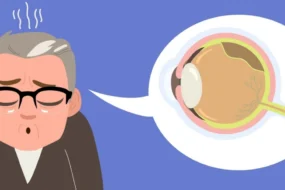
Also known as birdshot uveitis, birdshot chorioretinopathy (BSCR) is a rare autoimmune disease that causes inflammation in the uvea, the part of the eye that is responsible for supplying blood to the retina. A severe form of posterior uveitis, birdshot uveitis specifically affects the choroid, the layer of blood vessels and tissues at the back of the eye. As the choroid accounts for 85% of the total blood flow in the eye, it provides the retina with oxygen and nutrients through blood vessels.
Birdshot chorioretinopathy affects both eyes and is usually identified through small oval cream-coloured yellow spots on the retina and choroid. Disruption in the blood flow leads to this rare eye condition. According to the Cleveland Clinic , this condition affects less than 1 in every 100,000 individuals.

Symptoms of birdshot chorioretinopathy
Birdshot chorioretinopathy often begins with blurry vision and/or eye floaters, black dots or wispy lines that individuals see moving across their field of vision, especially when looking at something bright, such as the sky or white paper.
Although they can vary from individual to individual, the main symptoms of birdshot chorioretinopathy include:
- Floaters
- Reduced vision or vision loss
- Nyctalopia – night blindness
- Dyschromatopsia – colour vision deficiency
- Photopsia – flashes of light
- Blurred vision
- Sore or painful eyes
- Loss of peripheral vision
- Photophobia – sensitivity to bright lights or glare
This condition develops gradually and continuous inflammation in the eyes can cause progressive vision loss at later stages.
Causes of birdshot chorioretinopathy
Birdshot chorioretinopathy is an autoimmune disease in which the immune system of the body starts attacking the healthy cells by mistake. Although the exact cause is unknown, the condition is strongly believed to be linked with the specific gene called HLA-A29, which is received from biological parents. It is an antigen substance that triggers an immune response.
The Cleaveland Clinic explains that more than 90% of the individuals diagnosed with birdshot uveitis inherit HLA-A29, showing the prominent part played by this substance in this eye condition. However, it’s not necessary to have this antigen to develop this eye condition. An individual can have this antigen and still not be affected by BSCR.
Diagnosis of birdshot chorioretinopathy
As the condition is quite rare, it is often difficult to diagnose. There is a possibility that an individual may have the early stages of BCSR and does not even realise it because the symptoms do not always appear right away. Also, the symptoms mentioned above are not specific to birdshot uveitis and are broad-ranging, which is why they can signify other eye diseases.
During an eye examination, cream-coloured oval spots may be visible at the back of the eye and may indicate birdshot chorioretinopathy. An optometrist will then recommend that the individual take a further series of eye tests, including a blood test, to diagnose the disease and accurately rule out other possibilities.
Treatment for birdshot chorioretinopathy
For most people, the treatment starts with doses of steroids to control the inflammation of the choroid and retina, which are reduced with time. Steroids can be consumed in different forms, such as eye drops, oral medicines, injections or implants. Some individuals might be prescribed immunosuppressants to control the attack of their immune system on their eyes. However, long-term treatment with steroids and immunosuppressants can come with manageable side effects, such as bone problems, digestion-related issues and others.
There is no set rule of treatment for this eye condition, which is why it’s recommended to regularly monitor the symptoms and consult with the optician from time to time. They may advise going for regular eye exams, including visual field tests, optical coherence tomography (OCT) scans and colour blindness tests.
Frequently Asked Questions
Is birdshot chorioretinopathy curable?
No, there is no cure for this eye condition. It can either be inherited or developed at a later stage of life. However, BSCR can be controlled by early detection of the symptoms and timely diagnosis and treatment.
Who is affected by birdshot chorioretinopathy?
Although anyone can develop this eye condition, it predominantly affects people in their middle age, between 45 and 50 years old. This does not mean younger individuals cannot be affected by it.
How rare is birdshot chorioretinopathy?
According to the Cleveland Clinic, birdshot chorioretinopathy affects less than 1 in every 100,000 individuals.
What is the life expectancy of someone with birdshot chorioretinopathy?
Birdshot uveitis doesn’t affect life expectancy. It is a chronic, progressive eye condition that majorly impacts vision. Although if left untreated, it can lead to vision loss. BSCR is not fatal.
Is birdshot chorioretinopathy serious?
Yes, birdshot chorioretinopathy is a serious eye condition that causes inflammation in the uvea. It is a severe form of posterior uveitis, particularly affecting the choroid.
Disclaimer: The advice in this article is for informational purposes only and does not replace medical care or an in-person check-up. Please check with an eye care professional before purchasing any products or remedies. For information on our article review process, please refer to our Editorial Policy.


Dr Alastair Lockwood is an experienced ophthalmologist and eye health advisor. The major focus of his career is on preventing sight loss caused by glaucoma and other serious eye conditions. Along with undergraduate training at Cambridge University and clinical training at Oxford University, Alastair has also completed an MRC-funded PhD at the UCL Institute of Ophthalmology and Moorfields Eye Hospital. Dr. Alastair combines surgical expertise with a passion for research, regularly advising his patients on various eye care concerns and prescribing dry eye treatments and eye care products.