Adding vitamins, minerals and nutrients is not only important for maintaining your overall health and wellbeing, but also for good eye health and vision support. One of the best ways to keep your eyes healthy is by taking the right nutrients and eye supplements regularly.
Poor nutrition is associated with many eye conditions, such as dry eye disease, cataracts (clouding of the eye’s lens) and age-related macular degeneration (AMD). You can reduce the risk of these conditions by following a healthy diet, taking supplements and leading a healthy lifestyle.
Krina Halai, Dispensing Optician at Feel Good Contacts, recommends including the following foods, nutrients and eye health supplements in your diet to support eye health.
Vitamins
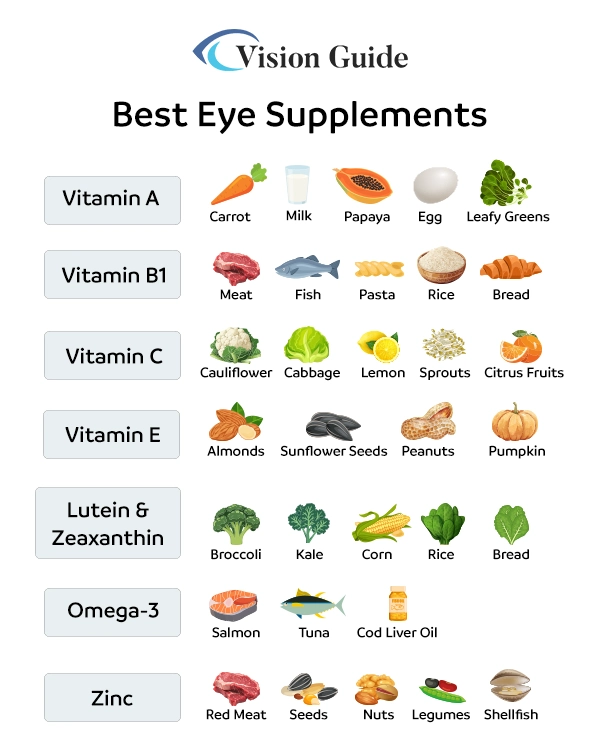
Vitamins act as antioxidants that help remove damaging oxidising agents. The body undergoes a process called oxidative stress, which is considered the primary cause of ageing and death of cells. Eye vitamins include vitamins A, B, C and E. You can consume them naturally via foods or eye health supplements like Eyetamins Vision Support, available at trusted eye care online retailers like Feel Good Contacts.
1. Vitamin A
Also known as retinol, vitamin A produces pigments in the retina (the layer of tissue at the back of the eye) and helps protect the retina, the cornea (the transparent outermost layer at the front of the eye) and the ocular surface (the layers coating the eye). It also enhances both normal and night vision, providing better vision in low-light conditions. Some research suggests that vitamin A, along with beta-carotene, can help reduce the onset of AMD and cataracts.
Severe Vitamin A deficiency can gradually lead to a serious eye condition called Xerophthalmia , which can result in extreme eye dryness, structural damage to the cornea and conjunctiva and potential blindness if left untreated. Vitamin A is found in foods like carrots, yoghurt, milk, cheese, egg yolks, dairy, liver, red and yellow fruits and vegetables and dark leafy greens like spinach.
2. Vitamin B
Vitamin B includes vitamins B1, B2, B6, B9 and B12. When taken in the right combination, all of these can help maintain eye health and may reduce the risk of eye conditions like AMD.
- Vitamin B1 (thiamine) can help reduce inflammation and slow down the onset of cataracts. Studies show it may also prevent progressive retinal damage caused by reduced blood flow (in diabetic retinopathy) and high blood sugar. It is found in foods like grains, fish, meat, pasta, rice and bread.
- Vitamin B2 (riboflavin) deficiency is linked to an increased risk of cataracts. It is found in foods such as green vegetables, certain nuts, fortified foods and meat.
- Vitamins B6, B9 and B12 can help reduce the risk of vascular retinal problems. They are found in foods like fish, poultry and meat.
3. Vitamin C
Vitamin C, or ascorbic acid, acts as an antioxidant and produces collagen in the cornea. It may help reduce the progression of macular degeneration and age-related cataracts, while supporting healthy retinal function. Even though your body does not produce it, vitamin C is found in vegetables like peppers, kale and broccoli and fruits like papaya, strawberries and oranges. Eye supplements, such as ICaps Tablets, also provide vitamin C.
4. Vitamin E
A group of compounds called tocotrienols and tocopherols, vitamin E works as an antioxidant. According to studies, it helps slow retinal ageing, macular degeneration and cataracts, while protecting the eyes from oxidative stress (imbalance between free radicals and antioxidants in the body). It is found in foods like butternut squash, trout, salmon, avocados, seeds like sunflower, nuts like almonds, oils like safflower and grapeseed and most green leafy vegetables.
Zeaxanthin and lutein
Zeaxanthin and lutein could help reduce the onset of cataracts and macular degeneration, while protecting the eyes from oxidative stress and relieving eye strain (caused by digital screens). They are found in dark green leafy vegetables such as kale and spinach.
Omega-3 fatty acids
Omega-3 fatty acids, a form of polyunsaturated fat that isn’t made by the body, help regulate various biological processes, like inflammation and blood clotting. They help maintain healthy vision and retinal function, which is linked to reduced risk of dry eye syndrome, glaucoma, cataracts and macular degeneration. They are found in nuts, seeds and fish such as tuna, sardines and cod.
Zinc
Zinc can help slow the progression of AMD and maintain overall retinal function as well as the eye’s protein structure and cell membranes. Zinc, along with vitamin A, helps produce melanin, a pigment that protects the eye from UV damage. It is found in foods such as legumes, seeds, nuts, red meat and shellfish.
Everyone, whether with perfect vision or at higher risk of eye health conditions, should eat a balanced diet rich in fruits, vegetables, whole grains, proteins and healthy fats. These nutrients and supplements can help prevent or slow down the progression of common eye conditions while maintaining optimal eye health.
It’s recommended to obtain essential nutrients from whole foods. However, people who want to boost their nutrient intake, have dietary restrictions or limited access to certain foods, can obtain these nutrients through high-quality eye health supplements. It is advised that you consult a healthcare professional before taking any eye health supplements.
Disclaimer:The advice in this article is for informational purposes only and does not replace medical care or an in-person check-up. Please check with an eye care professional before purchasing any products or remedies. For information on our article review process, please refer to our Editorial Policy.


Having graduated from City and Islington College in 2016, Krina Halai is a certified Dispensing Optician working with Feel Good Contacts. With 13 years of experience in the optical field, she has worked in multiple practices, including Boots and Specsavers, performed paediatric dispensing, supervised and trained future optical professionals and triaged patients for numerous spectacle fittings, repairs and adjustments. She has also taken an online course on myopia control and helped many children prevent their myopia from progressing.