Everyone knows how miserable motion sickness can be. Also known as kinetosis, motion sickness is when you experience feelings of dizziness, nausea, vomiting and cold sweats while in a moving vehicle, such as a car, plane or ship. It can also happen during amusement park rides or virtual reality experiences including fast movement.
If you have experienced any of these symptoms, you would have tried most of the available remedies, such as bracelets, lozenges, pills and patches. However, if nothing has worked for you or you don’t like the drowsiness from antihistamines or the taste of ginger, you might want to try a new treatment – motion sickness glasses.
Yes, you heard it right! Car sickness glasses have recently gained popularity on social media platforms like TikTok. Let’s take a close look at what car sick glasses are and how they might help.
What are motion sickness glasses?
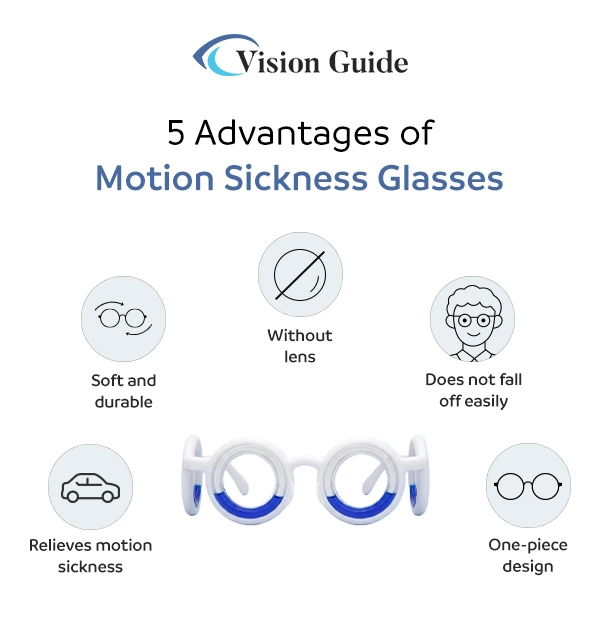
Created by French automaker Citroën, in collaboration with Boarding Ring (a French start-up), SEETROËN are the world’s first travel sickness glasses for adults and children over 10 years old. Designed by a studio in Paris, they are crafted from white soft-touch plastic with an ergonomic and simple design. Although they were initially developed for sailors, these travel sickness goggles can be worn by anyone while travelling. They don’t have lenses, which means you can wear them over your prescription glasses and share them with your travelling companions. Plus, they can be adjusted to fit all head shapes and sizes.
How do motion sickness glasses work?
Car sick glasses feature four rings – two on the front, one on the right and one on the left. Each of these rings is filled with a blue, moving liquid that creates an artificial horizon in your field of vision. This helps balance the conflict between the eyes and inner ears, easing travel sickness.
You need to wear these anti-nausea glasses as soon as you start experiencing the initial symptoms of motion sickness. After 10-12 minutes, the glasses will help to resynchronise the motion detected by your inner ear and stabilise visual cues. During this, your eyes should be focused on a steady object, like a book or a mobile phone. After this, you can remove the motion sickness prevention glasses and continue your journey.
Are motion sickness glasses effective?
The Citroën website claims that, in initial tests, its travel sickness glasses have cured up to 95% of people who experience travel sickness. However, to date, no published research has confirmed these results. One of the reasons car sick glasses might make you feel better is the placebo effect.
Nonetheless, some studies have found that prism glasses, primarily designed to correct double or blurred vision, can help alleviate travel sickness in both adults and children.
Wut Win, an experienced Dispensing Optician at Feel Good Contacts, says,
Prism glasses are helpful in relieving symptoms of Binocular Vision Dysfunction (BVD), including dizziness, headaches and eye strain, amongst others.
That said, it’s recommended to try travel sickness goggles and find out if they work for you, as they might not work for everyone, just like other remedies for motion sickness and seasickness. Additionally, the best motion sickness glasses can work for land travel but not for sea travel or vice versa.
Other ways to cure motion sickness
If you want to try other travel sickness remedies, besides anti-nausea glasses, you can consider these options:
1. Change your eye input
This means changing what you see while travelling through different ways. This includes ways like moving to the front seat of a vehicle, changing your body position by either standing or lying down (if possible), closing your eyes, facing forward, fixing your gaze on a distant, stationary object and avoiding screens or reading a book.
2. Take a prescription medicine
Several over-the-counter (OTC) medications, such as antihistamines, can help ease the symptoms of motion sickness. Before taking any medicine, consult your doctor and avoid driving, as some may cause side effects, such as drowsiness. Also, take the medicine 30-60 minutes before your initial symptoms start.
3. Use scopolamine skin patches
Also available in the form of a nasal spray, pill or injection, scopolamine can help prevent motion sickness. You can apply a patch to the skin behind your ear 4-8 hours before travelling. This patch is not for children under 10 years old or older adults.
4. Take a supplement
Studies indicate ginger helps prevent upset stomach, vomiting and nausea. You can take powdered ginger root in the form of ginger ale, ginger tea, ginger snaps, candy or capsules. Vitamin C can also help with travel sickness.
5. Wear an acupressure band
This bracelet applies pressure to your inner wrist’s P6 point, helping prevent vomiting and nausea.
6. Eat light and stay hydrated
You can eat a light snack, like crackers, and drink water or a carbonated beverage. Avoid eating acidic, spicy or greasy foods, as they can upset your stomach.
While travel or seasickness glasses might help some travellers to an extent, they may not be effective for everyone. It’s best to try them yourself and also explore the right medication and guidance to make your journey more enjoyable.
Disclaimer: The advice in this article is for informational purposes only and does not replace medical care or an in-person check-up. Please check with an eye care professional before purchasing any products or remedies. For information on our article review process, please refer to our Editorial Policy.


Wut Win is a qualified Dispensing Optician at Feel Good Contacts and a member of the Association of British Dispensing Opticians (ABDO). She is registered with the General Optical Council (GOC) and adheres to its professional guidelines. Wut graduated from City & Islington College with a Diploma in Ophthalmic Dispensing in 2006 and has over 17 years of experience. She has worked with several leading high street opticians, dispensing eyewear, including prescription glasses and sunglasses. Wut has also assisted children with autism and special needs through the Special School Eyecare Service.