Dry, irritated or tired eyes are among the most common concerns people raise during their eye check-ups, especially those who work on screens for long hours every day. Opticians often recommend preservative-free eye drops to relieve symptoms because they are gentler to the eyes. Read through our guide to know why these eye drops are considered gentler than the conventional ones, the key benefits of using them and how to choose the right ones for yourself.
Preservative-free Eye Drops vs Regular Eye Drops
Both types of eye drops seem to do the same job – relieve dryness and discomfort, but the difference lies in how they affect your eyes over time.
As the name suggests, preservative-free eye drops are lubricating drops that do not contain preservatives, which could potentially disrupt the natural balance of your tear film. These drops are designed to soothe and hydrate your eyes while being as gentle as possible. Designed for frequent use, they’re usually available in single-use vials or specially designed bottles that keep the contents sterile.
On the other hand, regular eye drops often include preservatives to keep the solution free from bacteria after the bottle has been opened. These eye drops can be used occasionally, but if you use them regularly, the preservatives can make your eye irritation or dryness worse, instead of relieving them.
5 Benefits of Using Preservative-free Eye Drops
When it comes to eye care, switching to preservative-free eye drops can make a big difference. Here’s why:
1. Gentle for sensitive eyes
If your eyes react easily and are prone to redness, stinging or watering, preservatives can make things worse. Preservative-free eye drops do not contain harsh additives and are much kinder to sensitive eyes. Whether you have allergies, mild irritation or just naturally delicate eyes, these drops are less likely to trigger discomfort.
2. Safer for frequent use
If you need to use eye drops daily or even several times a day, preservatives can gradually build up on the surface of your eyes. Over time, this may worsen the dryness or irritation. Preservative-free eye drops can be used as often as needed without worrying about long-term side effects, making them ideal for people who need relief throughout the day.
3. Better for dry eye management
Dry eye is not usually just occasional discomfort but a persistent condition that needs ongoing treatment. Preservative-free artificial tears are particularly effective because they support the natural tear film of your eye without interfering with the natural function of the eyes. They help keep your eyes more hydrated and comfortable, while protecting the tear film better than regular eye drops.
4. Reduced risk of eye irritation
Certain preservatives in regular eye drops can irritate the surface of the eye when used repeatedly. This can lead to redness, a burning sensation or a feeling that something is stuck in your eye. By choosing preservative-free eye drops, you eliminate that risk and get long-term hydration without exposing your eyes to harsh additives.
5. Ideal for contact lens wearers
Wearing contact lenses every day can sometimes make your eyes feel dry and irritated. Preservative-free eye drops for dry eyes can be suitable for regular contact lens wearers as they help provide moisture and keep your eyes comfortable.
Frequently Asked Questions
Are preservative-free eye drops better?
Preservative-free eye drops are better and safer than regular eye drops as they don’t put your eyes at risk of irritation, even if you use them daily. They are gentler to the eyes, especially for those who suffer from persistent dryness.
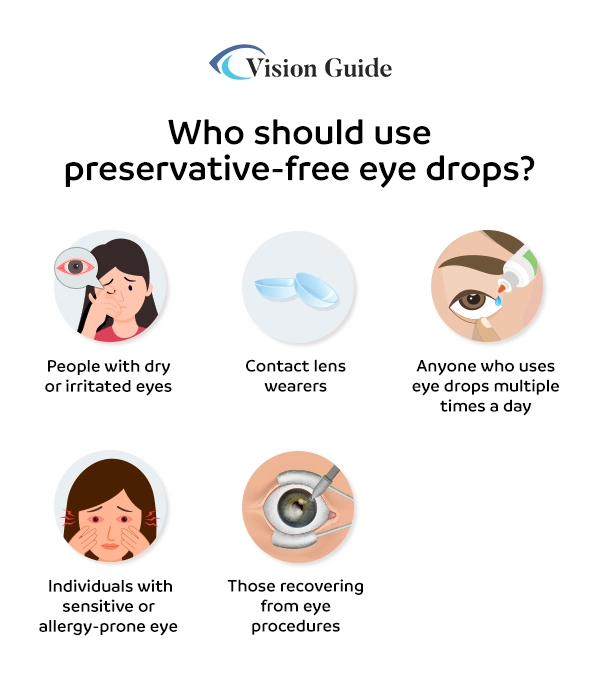
Who should use preservative-free eye drops?
Those with sensitive eyes or persistent eye dryness should use preservative-free eye drops. They are a safe and gentle alternative to regular eye drops for long-term comfort and relief.
How to choose the right eye drops for yourself?
You should not use any type of eye drops without consulting with your optician or eye care professional. Always check the ingredients for potential allergies and compatibility with contact lenses if you’re a contact lens wearer.
Disclaimer: The advice in this article is for informational purposes only and does not replace medical care or an in-person check-up. Please check with an eye care professional before purchasing any products or remedies. For information on our article review process, please refer to our Editorial Policy.


Tina Patel is a qualified Contact Lens Optician at Feel Good Contacts with over 25 years of experience in the optical industry. She is a member of ABDO and registered with the GOC. Tina holds a BSc. (Hons) in Optical Management from Anglia Ruskin University and qualified as a Dispensing Optician in 2002. In 2007, she further specialised by completing advanced training in contact lenses, gaining her qualification as a Contact Lens Optician. She now shares her clinical expertise through teaching at City, University of London, guiding future opticians.