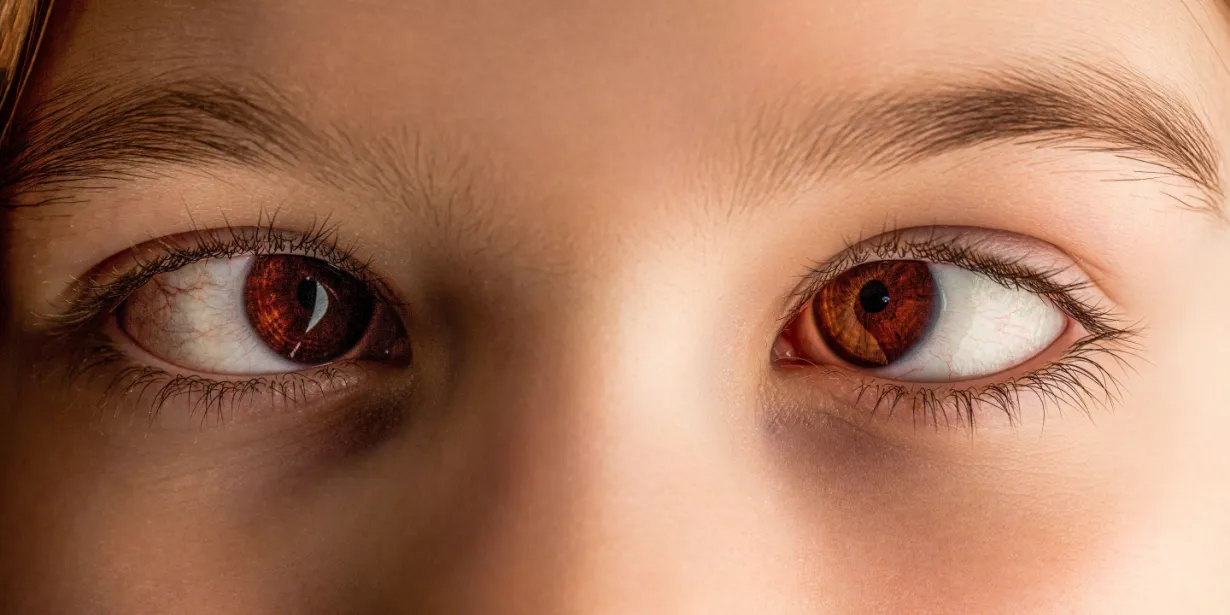
Strabismus, also known as a squint or crossed eye, is a condition where there is eye misalignment in which both eyes are not focused on the same object simultaneously. One eye looks forward to focus on an object, whilst the other eye deviates in a different direction. It can happen in one or both eyes and is most common in young children but can also occur in adults. Let’s understand more about this eye condition.
Amblyopia vs Strabismus

Amblyopia or lazy eye is a condition in which the vision in one eye does not develop properly during childhood, leading to blurry or unfocused vision in the one eye. Strabismus is a condition in which one or both eyes are misaligned. Both eyes do not appear to be looking in the same direction at the same time. A child’s visual system develops from birth up until 7 years of age. When the eyes send a signal to the brain, it registers two different images but cannot merge them into one single image. This reoccurrence would lead the brain to ignore the image from the eye with strabismus to avoid double vision and keep using the vision from the other eye. If left untreated, it can often cause amblyopia.
Causes of Strabismus
Eye movement is controlled by six extraocular muscles that help both eyes move together in all directions. An imbalance of these muscles can disrupt the function of the brain to control the coordinated movement of the eyes, which can result in strabismus. There is no exact known cause of strabismus; however, various risk factors and underlying conditions include:
- Refractive errors
- Prematurity
- Cataracts
- Cerebral palsy
- Stroke
- Head or eye injury
- Down’s syndrome
- Graves’ disease
- Family history
Types of Strabismus
Strabismus is usually classified based on the misalignment position and occurrence.
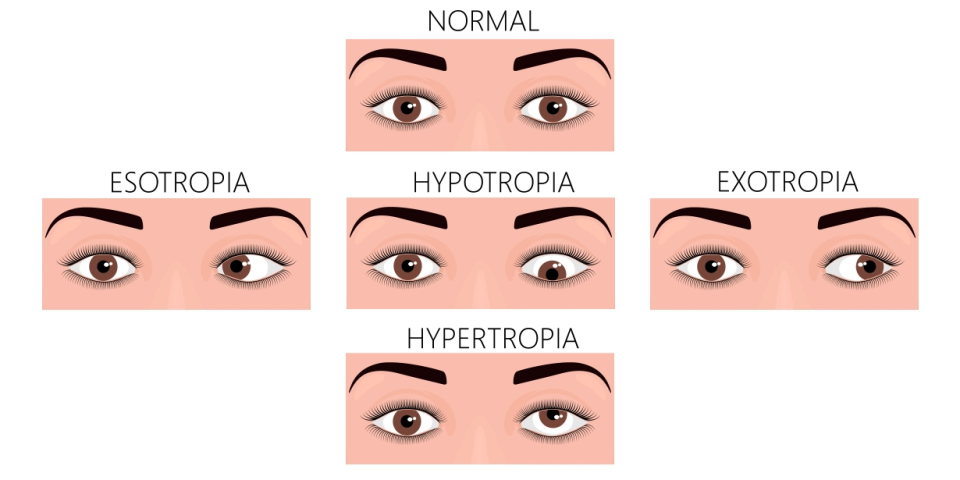
Strabismus types based on the eye ’s misalignment position:
- Exotropia: When the eye turns outward.
- Esotropia: When the eye turns inward.
- Hypertropia: When the eye turns upward.
- Hypotropia: When the eye turns downward.
Strabismus types based on when it occurs:
- Accommodative or refractive esotropia: This type develops due to uncorrected farsightedness (hyperopia) and is quite common in children. Farsightedness is when the eye needs to work harder to see close-up objects clearly. Due to excessive focus (accommodation) on nearby objects, the eye turns inward.
- Infantile esotropia: This condition develops in infants aged 6 months or under and causes one or both eyes to turn inward.
- Intermittent exotropia: This type occurs when one eye involuntarily drifts outward, often due
Who is at Risk of Strabismus?
According to a study in the UK, approximately 2.4% of children aged 4 to 5 years were reported to have constant or intermittent strabismus during the years 2012 to 2015. While strabismus is common in children, adults can also be affected by this condition.
Strabismus Symptoms
The most common symptoms include:
- Blurry or double vision
- Loss of depth perception
- Headaches
- Eye strain
- Light sensitivity
Strabismus Treatments
Treatment for strabismus focuses on the eye’s realignment and coordination. Based on the age, causes and severity, there are various treatment options available, including:
1. Glasses or Contact lenses
Glasses are often considered an effective option to correct the focusing issues if the strabismus is mild or with accommodative esotropia. Contact lenses may also be recommended for adults and for older children.
2. Prism Lenses
Prism lenses are designed to correct eye misalignment and if the condition causes double vision. These lenses work by bending the light that enters the eye, so that the location of the image can be adjusted on the retina for both eyes. Prism is either blended with the glasses lens prescription or can be a small stick-on sheet applied on the front surface of the lens, known as a Fresnel prism.
3. Patching
Doctors can recommend a patch for children, which can be worn over their normal eye to stimulate the weaker eye to work more. The patch can be worn for a few weeks or months until the eye is back to its normal position.
4. Medications
The doctor may also prescribe eye drops instead of a patch to blur vision in the normal eye, encouraging the crossed eye to be used more.
5. Botox
Botulinum toxin injections can be used to relax the muscles around the eye for better eye alignment.
6. Surgery
Surgery can be performed to adjust the length and realign the muscles around the eye. Both adults and children can undergo surgery to correct strabismus. The strabismus surgery usually involves general anaesthesia and dissolvable stitches to close the incision.
7. Vision therapy
To improve eye coordination and focus, your eye doctor might also recommend eye exercises or vision therapy to train the eyes to work together.
Frequently Asked Questions
Can adults develop strabismus?
Yes, adults can develop this condition after a stroke, head injury, thyroid eye disease, diabetes or nerve palsy.
Is strabismus permanent?
If left untreated, strabismus can be permanent.
Can strabismus be treated in adults?
Yes, it can be treated in adults, depending on the severity of the condition. However, treatment is most successful during the younger ages.
Disclaimer: The advice in this article is for informational purposes only and does not replace medical care or an in-person check-up. Please check with an eye care professional before purchasing any products or remedies. For information on our article review process, please refer to our Editorial Policy.


Having graduated from City and Islington College in 2016, Krina Halai is a certified Dispensing Optician working with Feel Good Contacts. With 13 years of experience in the optical field, she has worked in multiple practices, including Boots and Specsavers, performed paediatric dispensing, supervised and trained future optical professionals and triaged patients for numerous spectacle fittings, repairs and adjustments. She has also taken an online course on myopia control and helped many children prevent their myopia from progressing.