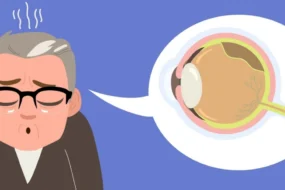
Myopia, also called nearsightedness or shortsightedness, is a common refractive error that causes distant objects to appear blurry. According to Moorfields , myopia affects around 1 in 3 people in the UK and often runs in families. It is generally diagnosed during childhood and adolescence (before 20 years of age) and tends to become more stable in early adulthood.

In myopia, you can clearly see nearby objects like words while reading a book, but find it difficult to do tasks that require distant vision, like watching television, driving or viewing far-away objects such as road signs and reading bus numbers.
Some people might find it difficult to view distant objects clearly in dim light, such as when driving at night, even if they can see clearly in daylight. This effect is known as night myopia. In this article, learn more about myopia, including its causes, symptoms and treatment.
Signs and Symptoms of Myopia
People with myopia can experience the following symptoms:
- Distant objects look fuzzy or blurry
- Close objects look clear
- Persistent eye strain
- Headaches caused by eyestrain
- Having to squint to see clearly
- Tired eyes when playing sports, driving or looking far away
Younger children might not be able to tell if they’re experiencing blurry distant vision. However, you can take them to an optician for an eye test if you frequently see them:
- Holding objects closer to their face, like a tablet or mobile phone
- Sitting close to the computer or television
- Squinting
- Not being able to see the board at school
What Causes Myopia?
Myopia generally occurs when the eyeball is longer than normal from front to back. This causes light to focus in front of the retina instead of directly on it. Myopia can also occur if the cornea is too curved or the eye focuses too strongly. In myopia, light rays that would normally focus on the retina (the light-sensitive tissue at the back of the eye) are instead focused in front of the retina. Because the image formed on the retina is out of focus, faraway objects appear blurry.

The exact cause of nearsightedness is not fully understood, but eye experts believe it may be caused by a combination of lifestyle and genetic factors. Tina Patel, an Optician at Feel Good Contacts, explains why myopia occurs:
“Myopia develops when the eye grows longer than normal or has excessive focusing power. Research suggests that both genetic and environmental factors, such as prolonged near work and limited outdoor time, can contribute to its development.”
Myopia vs Hyperopia
Myopia is the opposite of hypermetropia or hyperopia (long-sightedness or farsightedness). In hyperopia, nearby objects appear blurry, while distant objects are usually clearer. This happens because the eyeball is too short or the cornea is not curved enough. As a result, light rays focus behind the retina rather than directly on it.

Myopia Correction and Treatment
A basic eye exam can diagnose nearsightedness, which can vary in severity and may require different prescriptions for each eye. Myopia can be corrected with prescription glasses and contact lenses in both kids and adults. Adults can also opt for a refractive surgery to correct nearsightedness. Your eye care professional can recommend the best option based on your eye health and lifestyle needs.
Myopia prescriptions are written as negative numbers, such as -3.00. The higher the negative number, the stronger the correction needed.
Myopia Glasses
One of the most popular ways to correct nearsightedness is with prescription glasses. Based on your prescription, you will need to wear your glasses all day or only for distance vision, such as while watching a movie or driving. Most people with myopia need single vision lenses to correct distance vision. However, those over 40 years of age often develop presbyopia and may need progressive or bifocal lenses for clear close-up and distance vision.
Myopia Contact Lenses
Some people prefer contact lenses for correcting myopia because they offer a wider field of vision. Your eye care provider will inform you about the right type of contact lenses for myopia correction, based on your prescription, eye health and lifestyle requirements.
Surgery for Myopia
Adults can also correct their nearsightedness with laser eye surgery or refractive lens exchange. Refractive surgery corrects myopia by reshaping the cornea or by placing or replacing a lens inside the eye so that light focuses more precisely on the retina.
Some of the refractive surgeries performed for myopia correction include laser in situ keratomileusis (LASIK), laser epithelial keratomileusis (LASEK), photorefractive keratectomy (PRK) and intraocular lens implantation.
You should go for regular eye tests every 2 years (unless advised otherwise) to get your vision checked and see if your myopia isn’t worsening.
Frequently Asked Questions
Can Nearsightedness be Cured?
No, myopia cannot be cured, but it can be corrected to improve vision. In children, its progression can sometimes be slowed with myopia control techniques. Prescription glasses, contact lenses or even surgery for adults are some ways nearsightedness can be corrected. Consult an optician to find the best option for you.
Is Myopia Very Serious?
Yes, myopia can range from mild to severe, which can go over -6.00 diopters. High myopia can increase the risk of serious eye conditions, like myopic macular degeneration, glaucoma and retinal detachment. While most cases of myopia can be corrected with glasses or contact lenses, pathologic degenerative myopia is a rare but serious form of myopia that can lead to blindness if not treated early.
Can I Fix Nearsightedness Naturally?
No, myopia cannot be corrected naturally. However, in children, lifestyle changes may help to slow down progression. This includes maintaining a healthy lifestyle, spending more time outdoors, reading or doing close-up tasks in good lighting and taking regular screen breaks to reduce eye strain.
Disclaimer: The advice in this article is for informational purposes only and does not replace medical care or an in-person check-up. Please check with an eye care professional before purchasing any products or remedies. For information on our article review process, please refer to our Editorial Policy.


Tina Patel is a qualified Contact Lens Optician at Feel Good Contacts with over 25 years of experience in the optical industry. She is a member of ABDO and registered with the GOC. Tina holds a BSc. (Hons) in Optical Management from Anglia Ruskin University and qualified as a Dispensing Optician in 2002. In 2007, she further specialised by completing advanced training in contact lenses, gaining her qualification as a Contact Lens Optician. She now shares her clinical expertise through teaching at City, University of London, guiding future opticians.